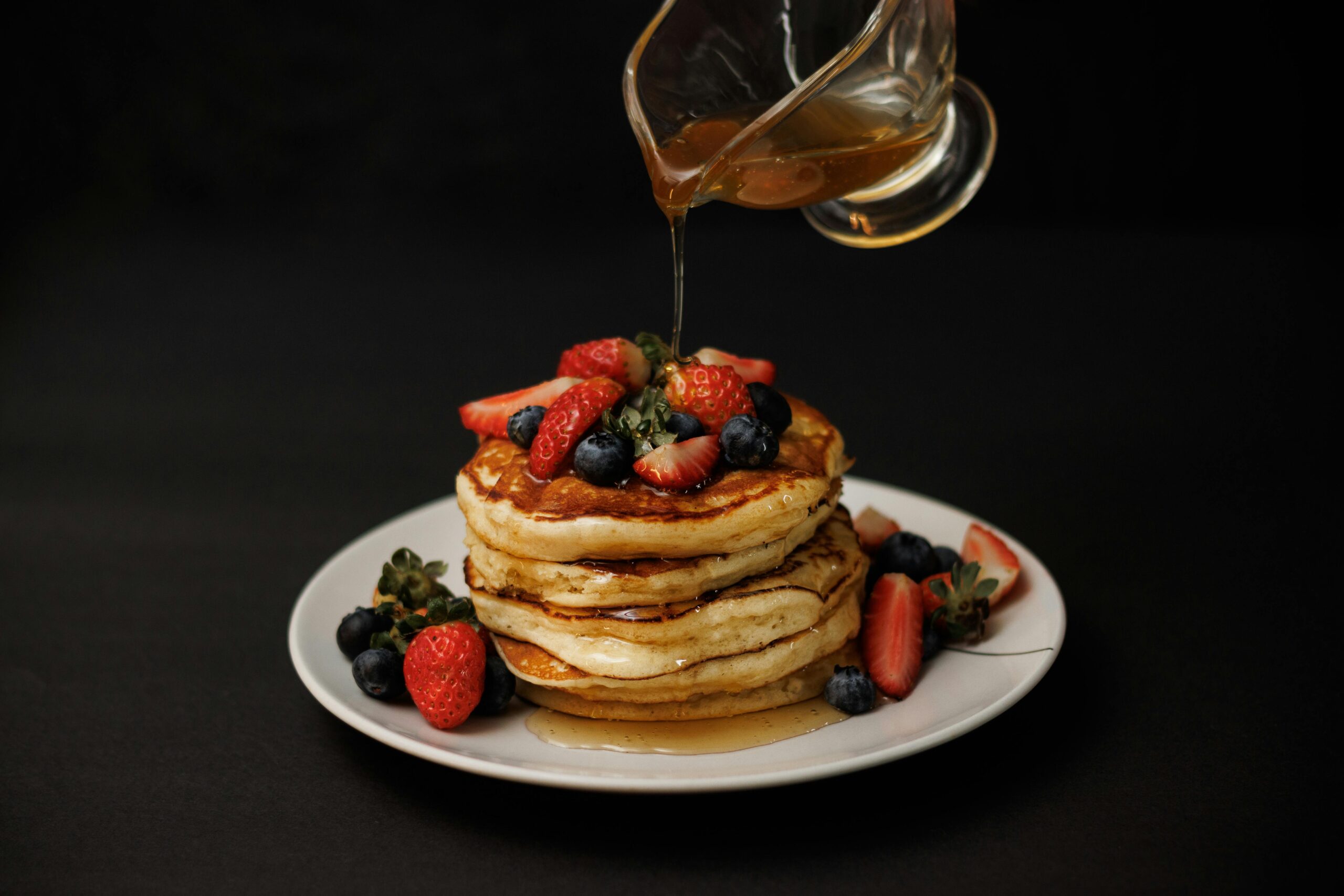
The Truth about Natural Sweeteners for Weight Loss.
We’ve all been there. You are trying to be “good”, you’ve cut out the white sugar, you’ve said goodbye to the candy aisle, and you feel like a total wellness warrior because you’re using the good stuff…the natural stuff. After all, we have been told that if sugar comes from a cactus, a beehive, or a maple tree, then it does not count towards weight gain. So, you buy all the top natural sweeteners for weight loss.
But then, the scale doesn’t budge, and you’re left wondering why your “healthy” granola or your “refined sugar-free” smoothie is not working its magic. Is your honey actually helping you, or is it hurting your progress?
That’s the question that we will answer today. If you would like to watch the video I made on this, please use the link below.
The Rise of Natural Sweeteners for Weight Loss.
There is this notion that natural sweeteners don’t count toward weight gain. As a result, many women have moved from using white sugar in their drinks and made the “healthy swap” to natural sweeteners like agave and maple syrup.
In fact, a recent study that surveyed more than 2,800 Americans aged 13 and above showed that 38% of Americans were trying to replace sugar with natural sweeteners. And when it came to cooking, 44% of the respondents replaced granulated sugar with natural sweeteners, with the top sweeteners being:
Honey or maple syrup was used by 42% of the respondents.
Natural sweeteners like monk fruit were popular with 23% of the respondents.
Artificial sweeteners like Splenda found favor with 22% of the respondents, while other sweeteners accounted for 13%
But even with these swaps, many women aren’t seeing the results they want, and it feels like a betrayal! After all, they are doing the work, they are buying the expensive agave, and the math just isn’t adding up. So, are natural sweeteners the answer to weight loss, or is there more to these dynamics than meets the eye?
Let’s break down why many women adopt natural sweeteners for weight loss, how your liver processes “natural” sugar, and how to actually enjoy sweet treats without stalling your progress.
Breaking Down Natural Sweeteners for Weight Loss – Are They Better for You?
While there are many women who replace refined sugar with natural sweeteners because of the health benefits that the latter offer, a good number also do so to lose weight. Let us see how this plays out.
The Role of the Halo Effect.
We can blame the health halo effect for the idea that natural sweeteners are better for our waistlines. You see, marketers love to use words like unrefined or raw to make us feel like these products are a different category of food entirely.
We think that:
White sugar = Processed/ Bad.
Alternatives like Honey = Nature/ Good.
And look, these natural sweeteners do come with antioxidants and enzymes. Honey is a great example of this.
But here’s the kicker: No matter the type of sugar you are eating, your body eventually breaks it all down into the same basic units, which are glucose and fructose.
Agave is especially tricky because it is very high in fructose—sometimes up to 90%. While fructose doesn’t spike your insulin as fast as glucose, an excess of fructose is processed almost entirely by your liver.

If the liver gets overwhelmed with too much liquid energy, it does what it’s programmed to do, and it stores that extra energy as fat. But because some people think that using natural sweeteners for weight loss gives them leeway to consume as many of them as they want, they miss this important nuance.
Are Natural Sweeteners for Weight Loss Just Liquid Calories?
Given that we think that natural sweeteners are healthy and low in calories, we tend to free pour these sweeteners. But unfortunately, natural sweeteners are often more calorie-dense than table sugar. According to a breakdown by Consumer Reports, natural sweeteners can be quite high in calories and sugar. Here are some examples:
Honey: 21 calories, 5 grams of sugar per teaspoon.
Maple Syrup: 17 calories, 4 grams of sugar per teaspoon.
Agave: 21 calories, 5 grams of sugar per teaspoon.
But how does this compare to table sugar? A tablespoon of white sugar would average 48 calories, yet one of honey would come to 64 calories, and one of agave nectar would come to 60 calories, which makes the natural sweeteners higher in calories!
| Sweetener (1 Tablespoon) | Calories |
| White Sugar | ~48 Calories |
| Honey | ~64 Calories |
| Agave Nectar | ~60 Calories |
See those numbers? But because we perceive natural sweeteners for weight loss as healthy, we tend to use more of them. You might put a teaspoon of sugar in your coffee, but you’ll “drizzle” three teaspoons of honey on your yogurt because it’s natural. And suddenly, you’ve doubled your calories without even realizing it.
Do Calories Count in Natural Sweeteners?
Now, we come to the same statement I make in every video and blog when it comes to weight loss trends, and that is your weight loss depends on you being in a calorie deficit. So, if you’re in a calorie surplus because of natural sweeteners like maple syrup or honey, you will still gain weight. Even if your sugar may be coming from organic dates and banana smoothies, you still need to watch your total calorie intake.
How to Embrace Natural Sweeteners for Weight Loss.
Given all the studies I have shared, am I saying you should throw away your honey? Absolutely not! I love a good honey-lemon tea as much as the next person. The goal isn’t to fear these foods. It’s to stop being tricked by the idea that they are lower in calories.
In my Better in 90 program, we use these three strategies to handle these sweeteners:
Monitor Your Intake.
As we have seen, natural sweeteners for weight loss can be just as high or even higher in calories compared to table sugar. As such, you should treat honey, agave, and maple syrup exactly like you would treat white sugar. Don’t just “drizzle” from the bottle; instead, measure it. You will easily see that a tablespoon is a lot more than you think when you’re trying to hit a weight loss goal.
Consume Whole Fruit First.
A squirt of agave or a drizzle of honey gives you sugar with zero fiber, making it way too easy to overeat these natural sweeteners. So, if you’re craving something sweet, go for whole fruit. When you eat an apple, a banana, an orange, or any other fruit, the sugar comes with fiber. And as we talked about in the plant protein guide, fiber slows down the absorption of sugar and keeps you full.
Check the Labels.
The health halo effect is upon us, more so when it comes to natural sweeteners. To ensure you are not being roped into buying an unhealthy food that is not quite as it seems, watch out for Healthy snacks. Protein bars, natural sodas, and organic granolas are often loaded with brown rice syrup or agave.
And just because it’s organic doesn’t mean it’s calorie-free. Look at the Total Sugars.
For a 2,000-calorie daily diet, the CDC and FDA recommend limiting added sugars, including natural sweeteners like honey, maple syrup, and agave, to less than 10% of total daily calories, which is a maximum of 50 grams per day. The American Heart Association (AHA) has stricter limits, which are no more than 24g for women and 36g for men daily.
Join Better in 90.
Natural sweeteners are better alternatives to refined sugars as they are less processed and thus have small amounts of nutrients and antioxidants. However, they are still high in calories. Luckily, you can reach your weight loss goals while enjoying natural sweeteners. You just have to enjoy them in moderation while keeping an eye on their total calories.
If you would like to learn more about how you can use natural sweeteners for weight loss while creating a sustainable lifestyle that you can stick to for years, I invite you to check out my Better in 90 program, which was designed to help women lose weight and keep it off.
