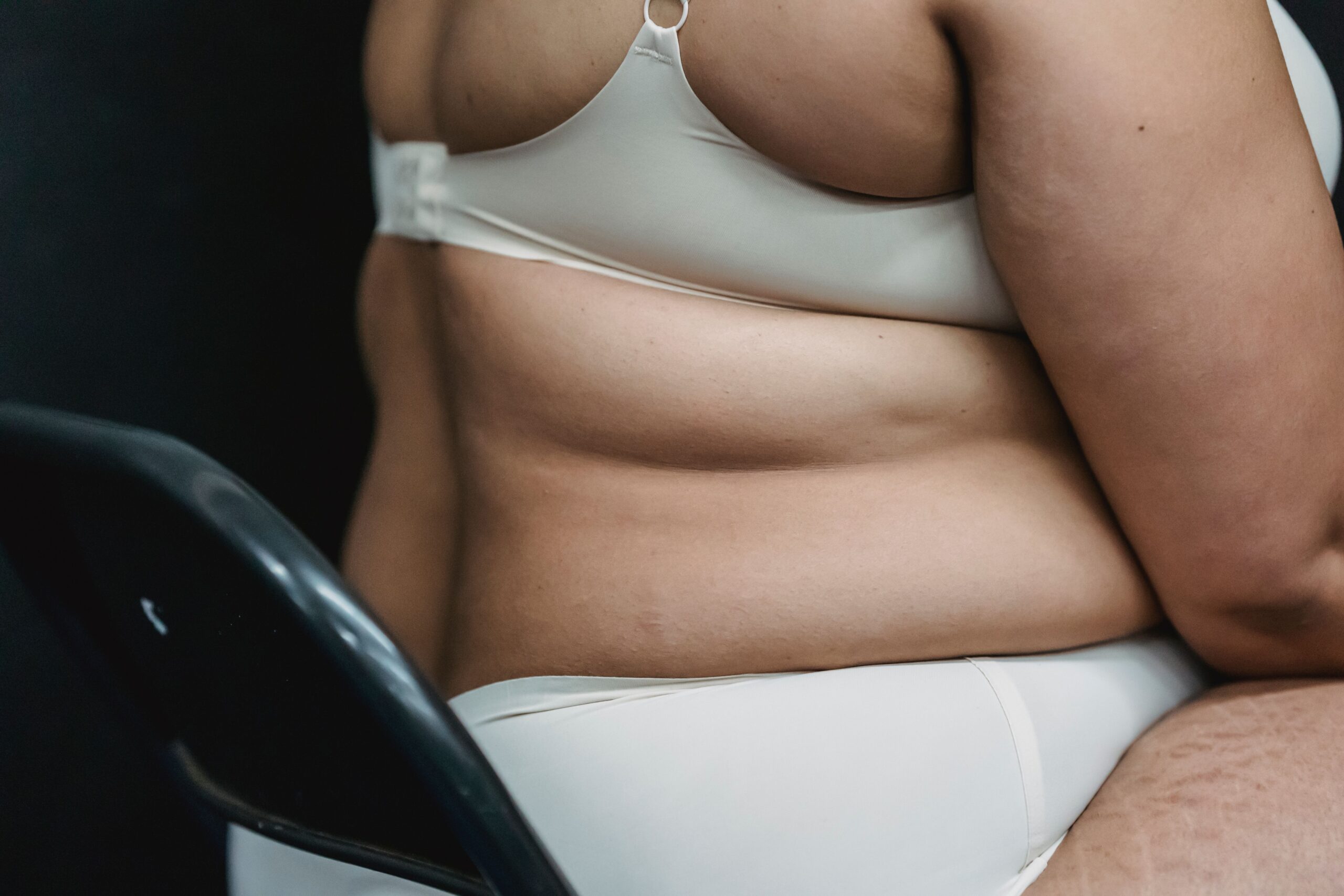
Why Menopause Affects Weight Loss—And How to Beat It
The other day, I came across a creator who had this idea that when you hit menopause, then your body starts holding on to fat because it is so stressed and that it no longer is as simple as calories in vs calories out. In her comments section, there were two camps regarding whether menopause affects weight loss.
In one camp, there were people who agreed with her and felt that menopause weight gain was inevitable. And then we had women who had lost weight during menopause who thought that this creator was wrong.
So what is the reality?
In this guide, I touched on how many women believe that old age comes with weight gain and how many women have accepted weight gain as a tax for growing older, with others accepting the weight gain from as early as their mid-twenties.
But while there are many women in their 20s and 30s who are giving in to the weight gain, in my research, I found that this thinking often centers on the changes that come with menopause. It almost seems like as soon as ‘the change’ comes a-calling so do wider jeans and looser shirts.
You might even know someone who started gaining weight during perimenopause or once they hit menopause. It could even be that you have been through this and think that menopause is to blame for your weight gain.
But is it?
Let us talk about how menopause affects weight loss. If you would prefer watching the video dialogue on this, you can do so using the link below.
Does Menopause Affect Weight Loss?
I am really happy with how far we have come as a society when it comes to menopause. There was a time when women barely discussed it and instead called it the change. And there was a lot of secrecy regarding what really happened to our bodies.
Now, we have a lot of information about what to expect and that makes it much easier for women to navigate these changes physically, physiologically, mentally, and emotionally.
However, even with all this information, we are still unsure about some of the changes that we should expect more so when it comes to weight.
So, let us discuss that based on current research findings.
Who Do Women Think That Menopause Affects Weight Loss?
The fear around weight gain during menopause is not unfounded. In fact, studies show that an average of 50% to 60% of women gain weight during menopause. While some gain a slight amount ranging from 1 to 3 kilograms, which is about 2 to 7 pounds, some studies have shown that women can gain as much as 10 kilograms, which is about 22 pounds between the start of perimenopause and the confirmation of menopause. And much of this weight is often in the midsection.
So, the idea that menopause causes weight gain is not a myth per se. There are even creators who talk about these shifts and their effect on weight. So, when women say that they are gaining weight and they can only think of menopause as the reason, it starts to make sense that menopause affects weight loss.
And it does not help that doctors often dismiss these concerns as we can see in this comment section where a woman shares this.

Given the findings from studies, we know that menopause can cause weight gain. But it helps to understand why and how this happens.
How Does Menopause Affect Weight Loss?
During perimenopause, which is the stage at which most hormonal changes occur, women go through several changes, including:
A change in fat storage patterns – this is mainly because estrogen levels drop, resulting in more fat storage around the belly.
Lower muscle mass, which causes lower metabolism,
Sleep disturbances that increase fatigue and stress,
Changes in emotional and mental health, and
Lower energy.
These changes affect their metabolism negatively by lowering it. So, women find that the strategies they once relied on to lose weight are not working as well as they did before and they shift the blame to menopause.
Diet culture also plays a role in this weight belief. Often, women will come online painting menopause as the end of having a lean body. They play into the idea that menopause takes a toll on the body and they emphasize that these changes put an end to fat loss.
The end result is fear. After all, when you take a look at the studies on weight gain during menopause and then see that other women are struggling with weight loss during this period, it is easy to believe that menopause deserves all the blame.
Can You Lose Weight During Menopause?
Hormonal shifts during perimenopause and menopause are significant. And without getting into how they affect women emotionally and mentally, we can focus on what they do to us physically.

These shifts have an effect on our appetites, fat distribution, and even energy levels. All these changes can hurt weight loss efforts. For example, if your energy is lower than before, it becomes harder to move more and this lowers your total daily energy expenditure.
However, these effects are not set in stone nor are they able to override the laws of thermodynamics, which dictate that you will lose weight as long as you are in a calorie deficit. So, yes, you can lose weight even in perimenopause and menopause.
But how does this work?
Many women often feel that if they start moving more, then they will lose weight, which probably has a lot to do with the popularization of the 10k step challenge. But this does not always work as expected.
You see, while there are nuances to consider when losing weight during menopause, we still have to rely on the basics for the most part. And studies have established that women can still lose weight during and after menopause if they focus on the following three things:
Eating a Balanced Diet
Women who follow healthy diets which mainly comprise whole foods with adequate amounts of healthy fats, proteins, and carbs are able to nourish their bodies while also achieving a calorie deficit which can help them lose weight and keep it off despite the hormonal shifts.
Incorporating Strength Training In Their Workouts.
Loss of muscle mass has been attributed to a decline in metabolism. But that is not all. Losing muscle mass also impacts your strength and therefore your independence. As such, by building muscle, you not only increase your metabolic baseline but also improve your functional strength, both of which can help you lead a healthier and stronger life.
Strength training is an effective way to achieve this and while many women fear that lifting weights is hard or can make them look bulky, the truth is that it is quite simple and it is quite hard to look bulky by lifting more.
Adjusting Their Lifestyles.
Many women have such busy lives that they often neglect taking care of themselves when it comes to getting enough sleep or addressing their stressors. But as research shows, poor sleep disrupts your hunger and fullness cues and can result in a higher appetite, which can make you eat at a surplus.
At the same time, unmanaged stress levels result in an increase in stress hormones and these impact your appetite regulation as well.
I should also add that if you are strength training, adequate rest is important as your body uses this time to repair the micro tears in your muscle fibers, which is how you are able to build muscle. Besides, getting enough sleep also boosts your mental and cognitive focus.
So, either way that you look at it, getting enough sleep is important for your health.
By focusing on these three key factors, women can improve their bone density and muscle mass, balance their stress hormones, and get the nutrients they need to support healthy weight management. And this is not just theoretical. Many women are able to achieve weight loss by being consistent and embracing the realities of their changing bodies.
Dealing With How Menopause Affects Weight Loss
In my Better in 90 program, which was designed to help women lose weight and keep it off sustainably, I often work with women in perimenopause and menopause. And I know that menopause is a huge change in our lives physically, emotionally, physiologically, and mentally.
But at the same time, these women in my program and many others around the world have proven that menopause is not a barrier to fat loss.
By adopting strength training, balanced diets, and healthy lifestyle habits, women can improve their health and lose weight as they navigate this stage of their lives. It does take patience and consistency, but so do many other rewarding aspects of our lives.
If you would like to enjoy a personalized approach to navigating weight loss during menopause, I invite you to check out my Better in 90 program and learn more about how we can work together to achieve your goals.
107 WEIGHT LOSS LIES THAT KEEP WOMEN STUCK
Did you know that the average woman spends 17 to 21 years of her life on a diet?
And it makes sense. After all, weight loss advice is all over the place. One plan tells you to quit carbs, and the other tells you that they are safe till 6 pm. It is all very confusing, and millions of women find themselves stuck yo-yo dieting, forever frustrated by their never-ending weight loss journeys.
This book is different.
By breaking down weight loss beliefs based on the existing scientific literature and women’s lived experiences, we get down into the nuances behind common weight loss beliefs and what actually works in their place. And once you have mastered what actual data says about metabolism, habits, and human biology, you will be able to quickly tell weight loss lies apart from the truths.
So, instead of another book that promises you quick fixes or one that has you following rigid rules, you will walk away with practical insights on how to build a sustainable lifestyle. You will:
Finally stop guessing what works for your body,
Start trusting yourself again to make the healthy choice, and
Embrace a fulfilling journey to a healthier you.
Written by Daisy Njeri, a health and wellness coach who spent years trapped in yo-yo dieting before finally finding her way out, this book is not only empathetic but also empowering.

